Paid Placement on Product Directories: What You Are Buying, and What You Are Not
Paid placement on a product directory rents a labelled slot for a set time. It buys attention, not a better verdict or ranking. Ten steps to judge one first.
Paid placement on a product directory is a fixed, labelled slot (a homepage slide, the top of a category page, a card beside the browse pages) that you rent for a set period so the people already browsing that directory see your product first. It buys attention from that one site's audience for that one window. It does not buy a better review, a higher rating, a kinder verdict or a position in search results. It also works differently from paid search, which the CDP Institute glossary defines as "Web advertising that appears on search engine pages and is purchased by bidding on keywords": a directory slot is usually a flat price for a fixed time, with no auction and no keyword, and its reach ends at the directory's own pages.
That makes the decision narrower than it looks. You are not judging whether advertising works. You are judging whether this surface, on this site, in front of this audience, for this price, is worth one payment. This guide covers:
the surfaces directories sell, and what each one is for
what a placement does not buy, so you do not pay for something it cannot deliver
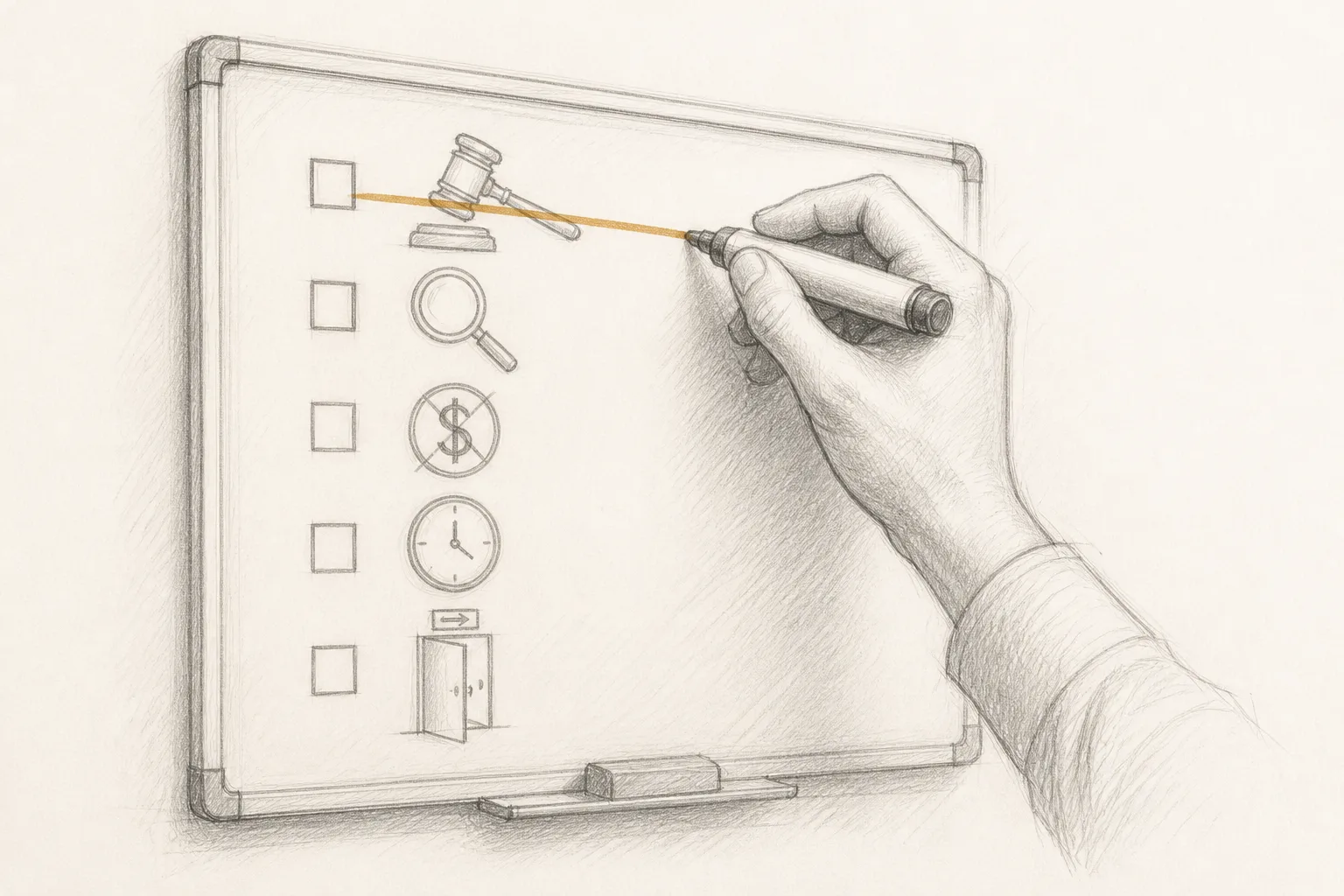
ten steps to judge a placement before you pay, with the place each step usually fails
the condition that decides between a homepage slot, a category slot and a card
a worked example on a directory with published prices
a checklist you can copy for any directory you are considering
What surfaces do product directories sell?
Most maker directories sell some mix of the same five surfaces. The names change from site to site; the mechanics do not. Before you compare prices, map each offer you are looking at onto one of these rows, because two offers with the same name can be different surfaces.
Newsletter
What launched, every Monday
Every Monday: what launched on LaunchScaler that week, what is launching next, and the reviews we published. Confirm your email once and you're in.
Surface
Where it appears
Who sees it
What it suits
Homepage hero or carousel slide
The first screen of the directory's homepage, often shared with other paid slides in rotation
Every visitor who lands on the homepage, whatever they came for
Products with broad appeal across the directory's audience
Top of category
The first position or a pinned strip on one category page
Visitors who already chose that category
Products in a category that is active and close to your buyer
Sidebar or spotlight card
A card beside browse pages, guides or search results, usually one of several
Visitors moving through many pages
Testing a directory cheaply, or staying visible across a whole site
Sponsored search result
A labelled entry inside the directory's own search
Visitors searching for a term on that site
Products whose buyers search the directory by task
Newsletter slot
A mention in the directory's email
Subscribers, on the day it is sent
A single launch moment rather than a month of presence
Three variables matter more than the surface name: how many other paid products share the slot, whether it shows on phones, and how long it runs. A homepage slide shared with two others is a different purchase from one shared with ten. A card that disappears on mobile reaches only part of the audience, and on many small directories that is the larger part.
If you are still deciding which directories to use at all, Where New Product Launches Actually Get Seen Now compares launch sites, directories, communities and newsletters on how long their attention lasts.
What does a paid placement not buy?
This is where most disappointment comes from. A placement is a rented position. Everything that depends on judgement or on a third party sits outside it.
A better verdict. If the directory rates, scores or reviews products, an honest one keeps that judgement separate from payment. If paying changes the score, the score is advertising too, and its readers will learn to ignore it.
A ranking in search engines or answer engines. A slot on someone else's page does not change how search engines or answer engines treat your own site. The slot lives on the directory's pages, and when it ends, the position goes to the next buyer.
A backlink worth having by itself. A link you paid for is advertising. The common convention is to mark paid links with a rel="sponsored" or rel="nofollow" attribute, and a directory that sells followed links as a placement feature is selling something you should not want on your record. How to Get Backlinks for a SaaS Product covers which directory links are earned and which are bought.
Conversions. A placement can put your product in front of people. Whether they sign up depends on your page, your price and whether they were ever your buyer.
Permanence. When the window closes, the slot goes to someone else. Anything you want to last has to live on a page that stays.
Keep this list next to you while you read an offer. Any sales copy that promises one of these five as a result of a placement is promising something the placement cannot control.
How to judge a paid placement before you pay
Run these steps in order for each directory. One action per step. Each one names where it usually fails and what to do instead.
Write down who you sell to and the single action you want from a visitor. One line each: "solo founders running a Shopify store" and "start the free trial", for example. Every later step compares the directory against these two lines. Where it fails: the action is vague ("awareness"), so nothing can be measured later. Recovery: pick the one click on your page that matters most and treat everything else as noise.
Browse the directory as a visitor for fifteen minutes before you look at the pricing page. Open the homepage, two or three categories close to yours, the newest launches and any community threads. Note who is listed and who is commenting. Where it fails: the directory is mostly other makers selling to makers, and your buyer is someone else (a dentist, an accountant, a parent). Recovery: if your buyer is not visibly present, stop here. A cheap slot in front of the wrong audience is still the wrong audience.
Check the category your product would sit in. Count how many products are in it, how recently they were added and whether they look like your competitors. Where it fails: the category is either empty (no one browses it) or a catch-all so broad that your product is noise inside it. Recovery: look for a narrower category or tag that matches your buyer's task, and judge the top-of-category slot against that page instead.
Confirm the placement is labelled as paid, on the page itself. Look at a live paid slot on the site. The label should be visible beside the product, in words a visitor reads ("Sponsored", "Featured", "Paid placement"), not only in a footnote. Where it fails: there is no label, or it is hidden in a tooltip. Recovery: treat an unlabelled slot as a reason to walk away. Readers who discover that a "top pick" was paid stop trusting the whole page, and many jurisdictions have advertising disclosure rules; if your product depends on that question, ask someone qualified, because this guide is not legal advice.
Find out exactly where the slot renders and how many others share it. Read the offer page, or ask, for four facts: which pages, desktop and mobile, how many paid slots rotate in the same position, and how the order is set. Where it fails: "homepage placement" turns out to be the fourth row below the fold, or one slide in a carousel of a dozen, or absent on phones. Recovery: if the directory will not say, open the site on your phone and on a desktop browser, scroll to the slot and count what you see. If you still cannot tell, assume the weakest reading.
Ask what is reported: views, clicks, and where you see them. A placement you cannot measure is a donation. The minimum is impressions (how many times the slot was shown) and clicks, reported while the slot runs. Where it fails: there is no dashboard, or the numbers arrive as a single total at the end. Recovery: measure it yourself. Add UTM parameters to the link you give the directory (for example ?utm_source=directoryname&utm_medium=placement&utm_campaign=spotlight) and read them in your own analytics. If the directory rewrites or strips the link, point it at a page that only that directory links to, so every visit to that page counts as theirs.
Read the booking terms: start date, length, renewal and refunds. Write down when the slot starts, when it ends, whether it renews on its own and what happens if you change your mind. Where it fails: a busy surface is booked for weeks, so the slot starts after the launch you bought it for; or a monthly slot renews silently. Recovery: only pay when you can see the start date before you pay, and set a calendar reminder for the end date whether or not the offer says it renews. Assume no refund unless the page states one.
Fix the page the slot points to before it goes live. Paying to send visitors to a slow, broken or confusing page wastes the slot on the first day. Load the page on a phone over a normal connection, check that the main action works end to end, and confirm the page is crawlable and indexable so the attention has something durable to land on. Where it fails: the directory pulls the card from an old listing with an outdated tagline or screenshot. Recovery: update your listing on the directory first, then book.
Set a pass mark before the slot starts. Decide what one visitor from that audience is worth to you, using your own conversion rate and the value of a signup, then divide the price of the slot by that figure. The result is the number of visitors the slot has to send to pay for itself. Where it fails: the maker sets no threshold, so any result feels like success or failure depending on mood. Recovery: write the number down now, before you see a single click. If you have no conversion data yet, the pass mark is a guess, so treat the first slot as a test of the audience rather than a test of return.
Record a baseline, then review at the end against your pass mark. Note how many visitors that directory already sends you without a slot (your free listing, if you have one). At the end, compare clicks, visits and the single action from step 1 against the baseline and the pass mark. Where it fails: the slot overlaps a launch, a newsletter mention and a social post, so nothing can be attributed. Recovery: use the dedicated link or page from step 6, and judge the slot only on traffic that carries its marker. Rebook only if it cleared the pass mark.
Steps 2, 4 and 6 are the ones that end most evaluations. If the audience is not yours, the slot is not labelled, or nothing is reported, the price does not matter.
Which surface should you choose?
Once a directory passes the ten steps, the choice between surfaces comes down to one condition: where does your buyer start on that site?
If your buyer arrives on the homepage and browses, and your product makes sense to most of the directory's audience, the homepage slot is the one that reaches them. It is usually the most expensive, and its value falls fast if your product only suits one category.
If your buyer goes straight to a category, and that category is active and close to their task, the top-of-category position reaches fewer people who are more likely to be yours.
If you cannot tell yet, or you are testing the directory itself, buy the cheapest surface that reports views and clicks. A month of data from a card tells you whether the directory's audience responds to your product before you spend more on it.
If your goal is one launch day, a newsletter slot or a launch-week bundle fits better than a month-long card, because the attention you want is concentrated in a few days.
The mistake to avoid is buying the homepage because it is the biggest. A large audience that does not include your buyer converts at the rate of the wrong audience.
The warning signs, in one place
Some offers fail the ten steps on their face. These are the patterns to recognise quickly.
Warning sign
What it usually means
What to do
"Guaranteed top ranking" or "guaranteed traffic"
The seller is promising an outcome the slot cannot control
Walk away, or ask in writing what happens if it does not arrive
No visible label on paid slots
Paid and editorial positions are mixed
Do not buy; the directory's credibility is the asset you are renting
Paid tiers come with a better rating or score
The rating is part of the product being sold
Ignore the rating; judge only the reach
"Dofollow link included" as a paid feature
A bought link presented as an earned one
Do not buy for the link; judge the slot on visitors alone
No reporting, or a total at the end only
You cannot judge whether it worked
Measure with your own tagged link, or skip
Automatic renewal not stated on the offer page
You may keep paying after the test
Ask before paying; set an end-date reminder
The slot is shared with an unknown number of others
Your share of the attention is unknown
Ask for the count; assume the worst if unanswered
None of these is unusual on small directories. Some directories simply have not built reporting yet, and an honest answer to your question is still useful. What you are looking for is a directory that tells you plainly what you get.
Worked example: running the steps against one published offer
Take a maker shipping an AI writing assistant whose buyer is "solo founders who publish their own product blog" and whose single action is "start a free account". They are considering LaunchScaler, a directory for indie makers and small teams launching web products and AI tools, so steps 2 and 3 pass: its audience is makers, which is this buyer, and the product would sit in the AI category, broad enough that the maker also checks the narrower tags. Every term in the table below is read from its placements page and its pricing page, which heads the placement prices "Visibility, not a better score" and states that a placement "never changes the measured score" shown beside a listing.
Step
What the page states
What the maker does with it
4, the label
Each surface is "Labelled as paid placement", so "a reader always knows it was paid for"
Passes; no further check needed
5, where it renders (card)
Spotlight, $19 / 30 days: a card beside every browse page and guide, inside the page on phones, and the top of your category page; one of eight, and their order changes each day
Notes that the card shows on phones and shares its position with seven others
5, where it renders (slide)
Featured, $79 / 30 days: one of 3 slides in the homepage carousel, plus the strip on every category page
Notes that the slide reaches the whole homepage audience, shared with two others
6, reporting
Views and click-throughs show in a placement dashboard once a slot is live
Adds a UTM-tagged link to the listing anyway, so visits appear in their own analytics
7, terms
30 days for one payment, and it does not renew; a busy surface books the next open window, and the start date shows before you pay; bought from the console on a website verified to your account; no refunds
Checks the start date against the launch week before paying
8, destination
The card is pulled straight from the existing listing
Updates the listing's tagline and screenshot first
9, pass mark
Prices as above
Divides each price by their own value per visitor; as a first test of the audience, the surface rule points to the cheaper card that reports
The table carries every fact the ten steps ask for: the pages, the phone behaviour, how many others share each slot, how the order is set, what is reported, the renewal and refund terms. A directory whose offer page leaves those cells empty is the one to question before you pay.
A placement checklist you can copy
Paste this into a note for each directory you consider and fill it in before you pay.
Placement checklist
Directory and surface name:
My buyer, in one line:
The single action I want from a visitor:
Is my buyer visibly present on the site (listings, comments, categories)? Yes / No
Category I would sit in, and how active it is:
Is the paid slot labelled on the page, in words a visitor reads? Yes / No
Pages it appears on, desktop and mobile:
Number of paid slots sharing the position, and how the order is set:
Reporting offered (views, clicks, where I see them):
My tagged link or dedicated page for this directory:
Start date, end date, renewal, refund terms:
Destination page checked on a phone, main action tested? Yes / No
Listing on the directory updated (tagline, screenshot)? Yes / No
Value of one visitor to me:
Price divided by that value (my pass mark in visitors):
Baseline visits from this directory before the slot:
Result at the end, and rebook decision:
A directory that leaves four or more of these lines blank after you have read its pages and asked is telling you something about how the month will go.
Common questions about the trade-offs
Is a paid placement worth it compared with a free listing or a launch day?
They do different jobs, so the question is which job you need done. A free listing is the permanent page: it stays in the directory's categories and search after any paid window ends, and it is where any earned link or durable visibility comes from. A launch day concentrates attention into a short window around a moment you choose. A paid placement rents extra attention on top of either, for a fixed period. Start with the free listing, because a placement points at it and gains nothing if it is thin. Use the launch day for the moment. Buy a placement only when the directory's audience is your buyer and you want visibility beyond the launch window; if you cannot say that, the free listing and the launch day are enough.
Is a paid placement worth it for a brand-new product?
Only after the page it points to works. A new product with an untested landing page gets more from fixing that page than from sending paid visitors to it. Once the page is ready, a cheap, reported slot on a directory whose audience is your buyer is a reasonable test, because it tells you whether that audience responds at all.
Should you buy placements on several directories at once?
Not on the first test. Running three slots in the same month, alongside a launch, makes attribution guesswork unless every directory has its own tagged link or page. Test one, read its numbers against your pass mark, then add the next.
Does a placement help your own site's search visibility?
Not directly. The slot lives on the directory's pages. What lasts for your own site is an earned, indexed page that links to you and a site that search engines and answer engines can crawl and quote, and a placement changes neither. If a durable third-party page is what you want, Software Product Review Sites compares where those pages can live.
How long should a placement run?
Long enough to collect enough visits to judge it against your pass mark. A month is common on small directories. A slot shorter than a week rarely tells you much unless it is tied to a single launch day.
What to do next
Pick the one directory you are most tempted to pay, and run steps 1 to 6 on it today before you open its checkout: write your buyer and action, browse it as a visitor, check the category, check the label, find where the slot renders, and confirm what is reported. If it passes, set your pass mark from step 9 and book the cheapest surface that reports views and clicks. If your buyer is another maker and the directory you are testing is LaunchScaler, that surface is the Spotlight card at $19 / 30 days, labelled as paid: Get Spotlight.
Catch SEO regressions after a deploy: baseline production, then re-check robots.txt, noindex, canonicals, redirects, raw HTML and certificates on every release.
A full website audit checks seven areas, not just SEO: search, AI visibility, backlinks, security, compliance, speed and visual, and whether your site works.
The free SEO tools that read your live site: Search Console, Bing Webmaster Tools, PageSpeed Insights, Rich Results Test, a crawler and a readiness scan, in order.